Breathe with a guide
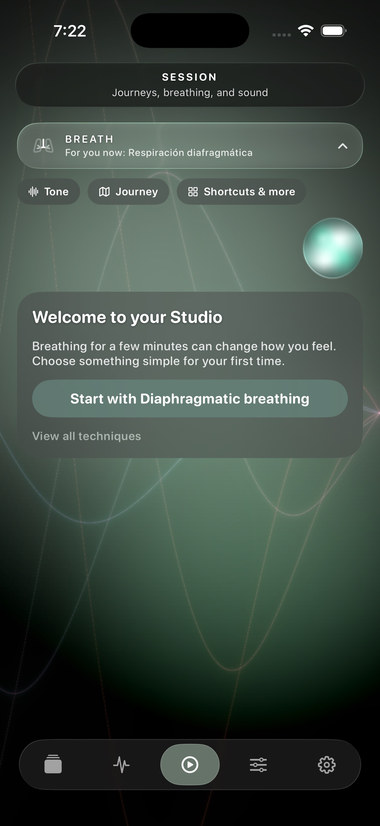
A catalogue of breathing techniques, each with its own pace and length. The app sets the rhythm with a sphere that grows and shrinks, and the sound's volume breathes with you.

A few minutes to settle before a meeting, focus for study, or wind down before sleep. NewMe Hertz combines guided breathing, neuroacoustic sessions and the signals from your Apple Watch to take you from how you are to how you want to be.
It is a wellbeing tool: it accompanies you. It does not diagnose and is no substitute for professional care.
What it is
Open the app, choose where you want to get to today and how much time you have. The app estimates how you are from the signals you authorise and builds a journey of breathing and sound for that stretch of time. On the iPhone, or right on your wrist.
A catalogue of breathing techniques, each with its own pace and length. The app sets the rhythm with a sphere that grows and shrinks, and the sound's volume breathes with you.
Binaural beats, isochronic tones and ambiences such as rain, ocean or forest. You choose the intensity and the ambience; the app combines them for the state you are heading to.
The watch measures on your wrist and sets up a journey in three taps: goal, minutes and ambience. The crown adjusts the intensity and haptics keep you company without looking at the screen.
How it works
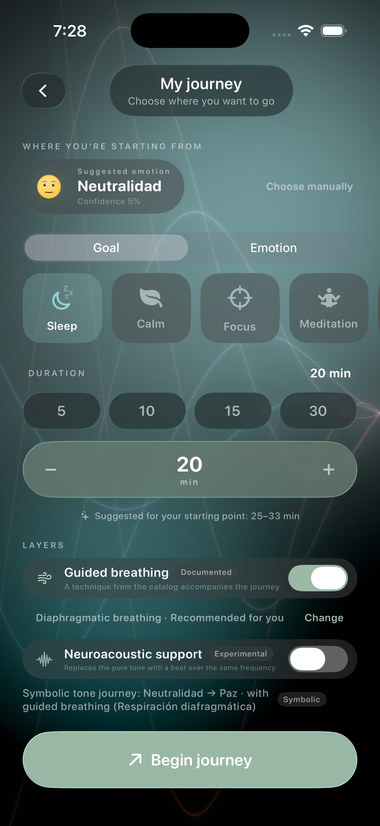
This is how a journey comes together, in five steps. Each one can be skipped, and skipping them all leaves you at the usual menu.
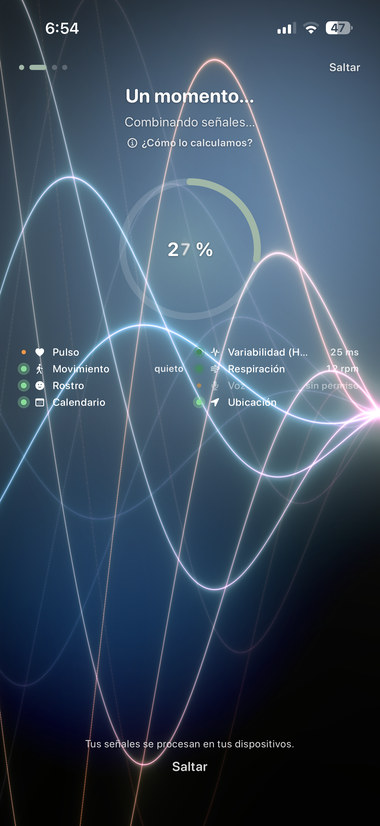
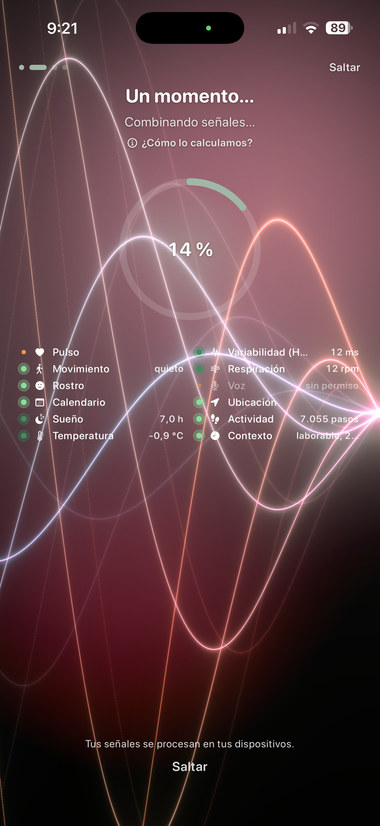
In a few seconds it combines the signals you authorised: pulse, variability, breathing, movement, sleep, temperature, face, voice, calendar, location. Out of that comes an estimate of your starting point. Your signals are processed on your devices.
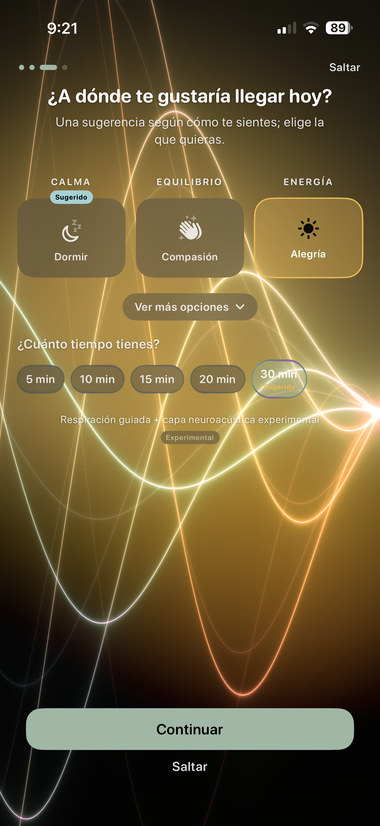
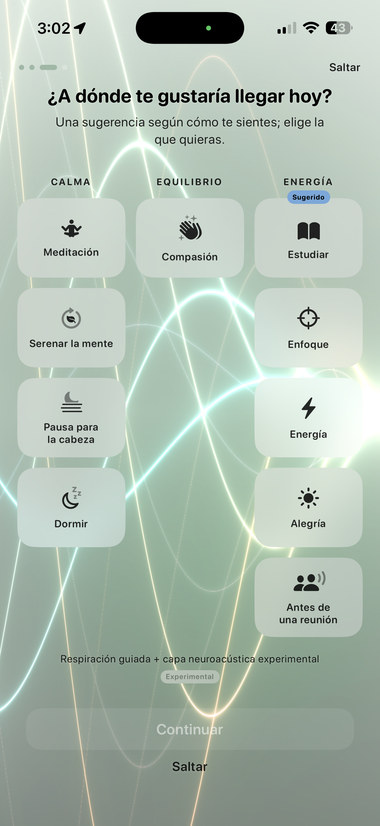
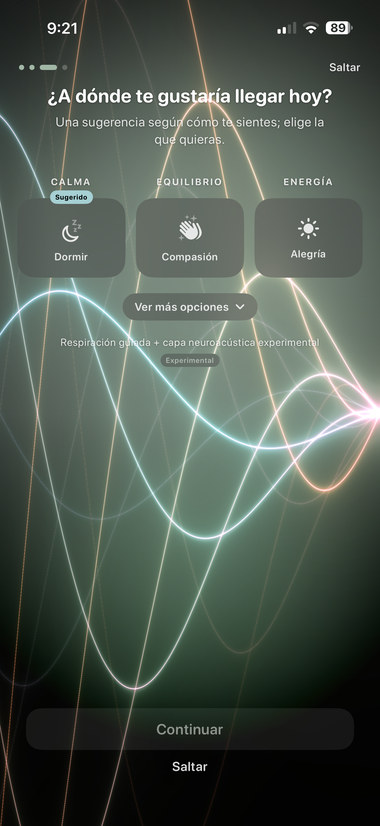
“Where would you like to get to today?” Calm, balance or energy: sleep, focus, joy, compassion, a break for your head. The best one for you is marked as suggested, and you say how much time you have, from 5 to 30 minutes.
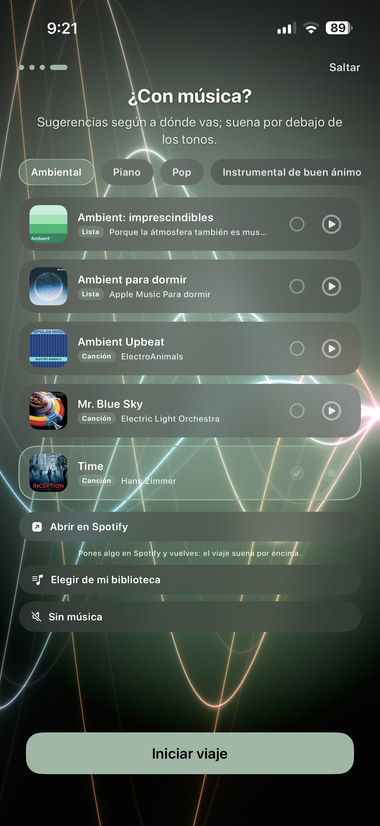
Apple Music suggestions for where you are heading, or open Spotify and come back. The music plays underneath the tones. You can also go without.
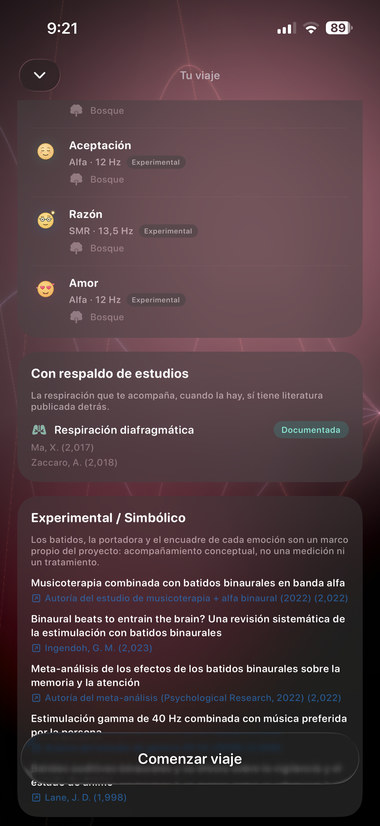
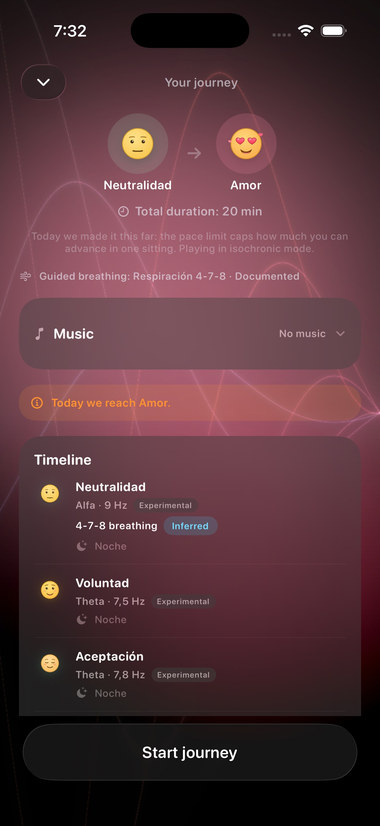
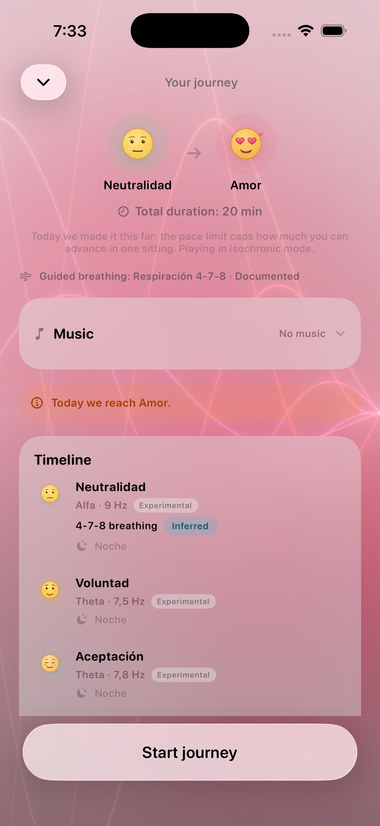
Before you start you see the route leg by leg: the states you pass through, the band and Hz of each, the ambience and the breathing technique. The app separates what has studies behind it from what is experimental and symbolic.
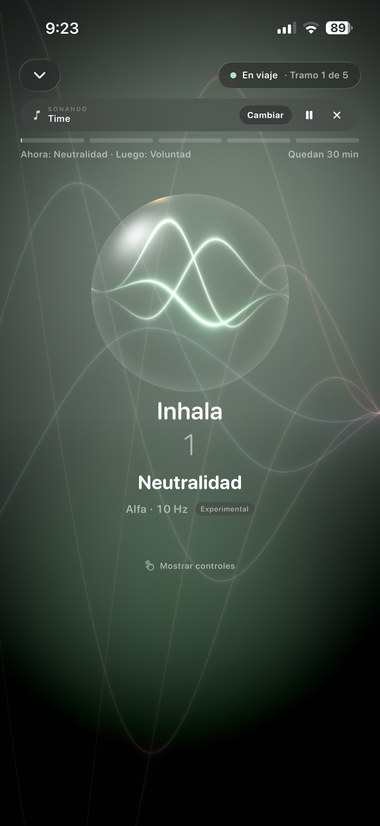
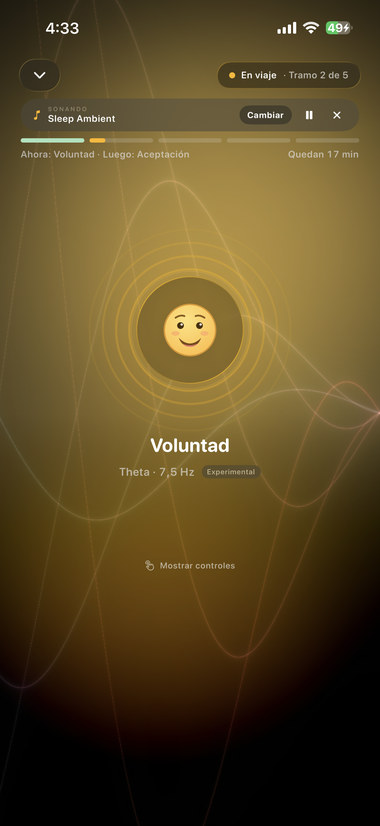
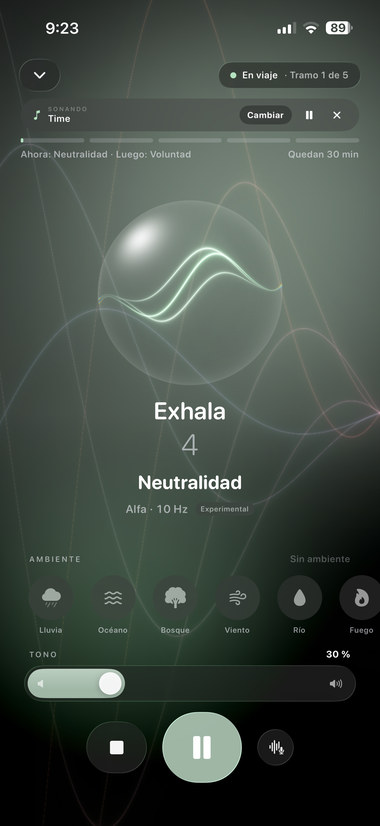
Inhale, exhale. A sphere sets the rhythm, the tone shifts with each leg and a bar tells you how much is left. Change the music, pause or stop whenever you like.
The app
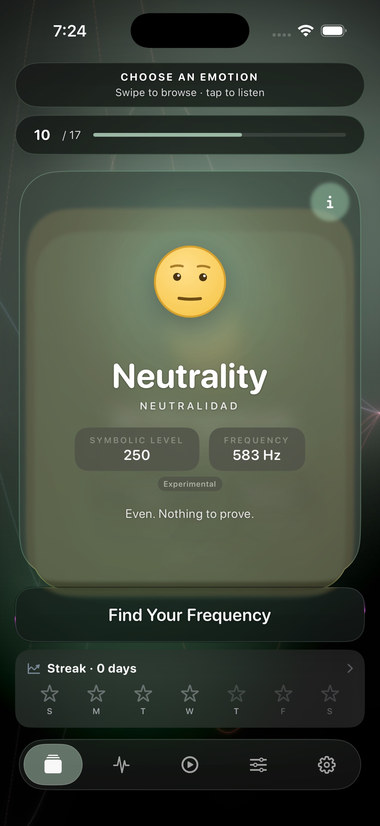
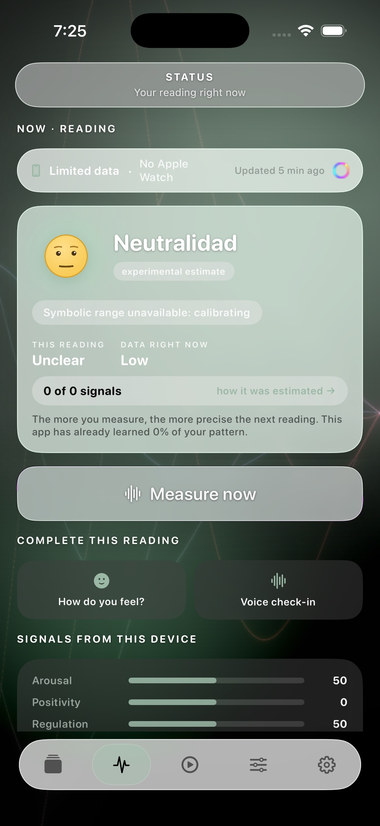
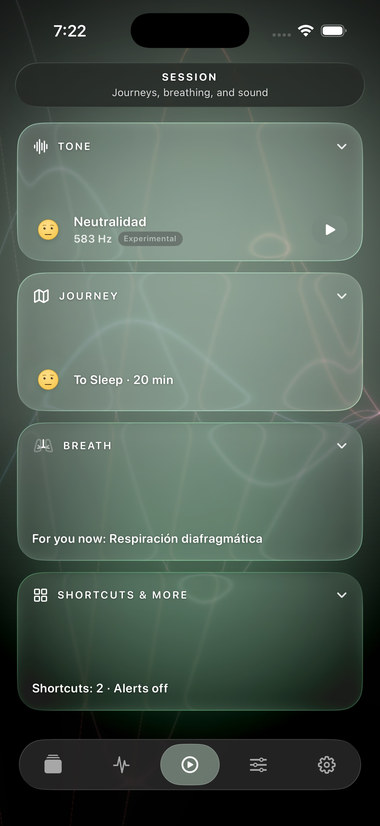
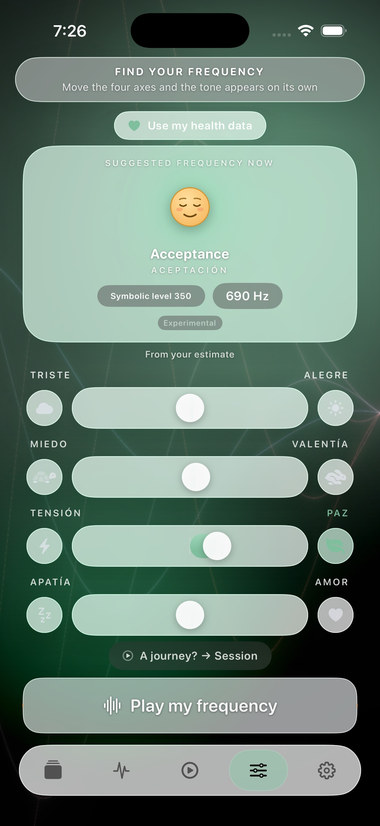
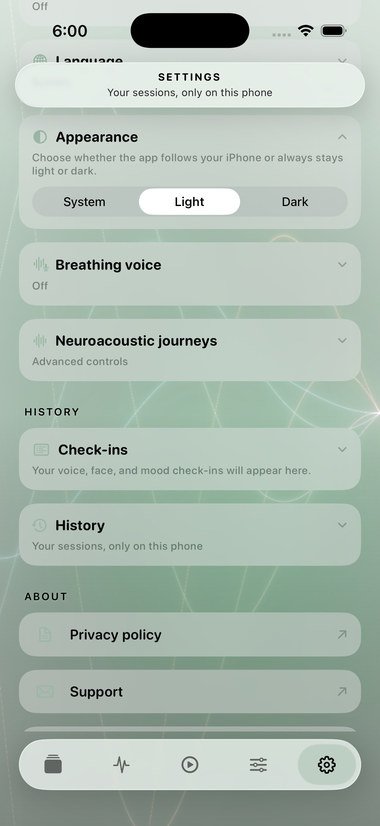
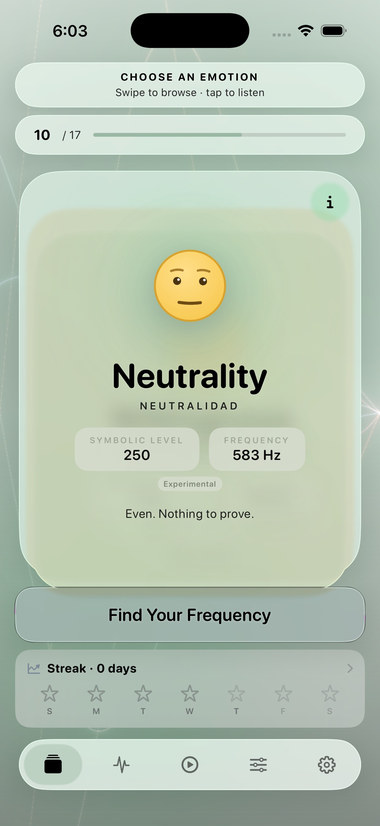
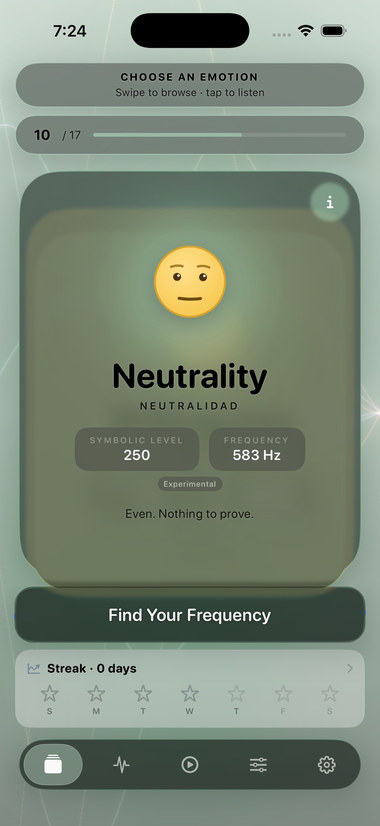
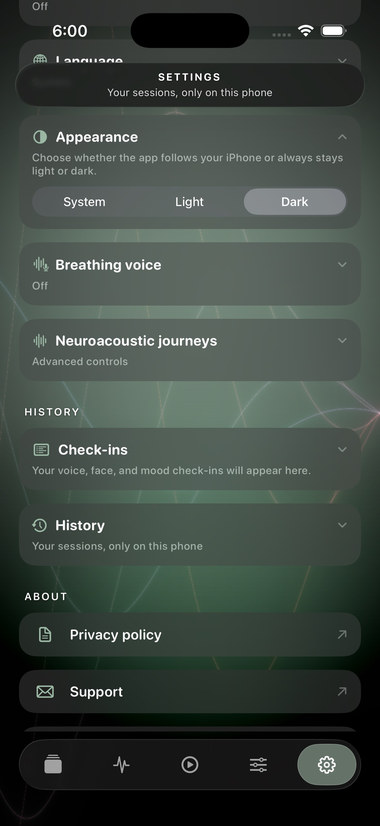
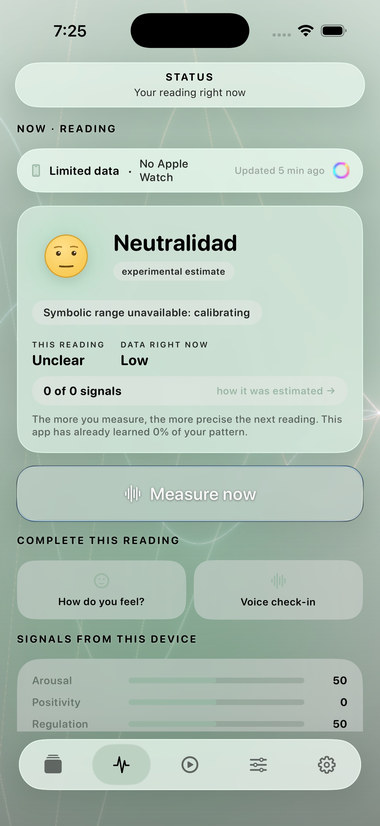
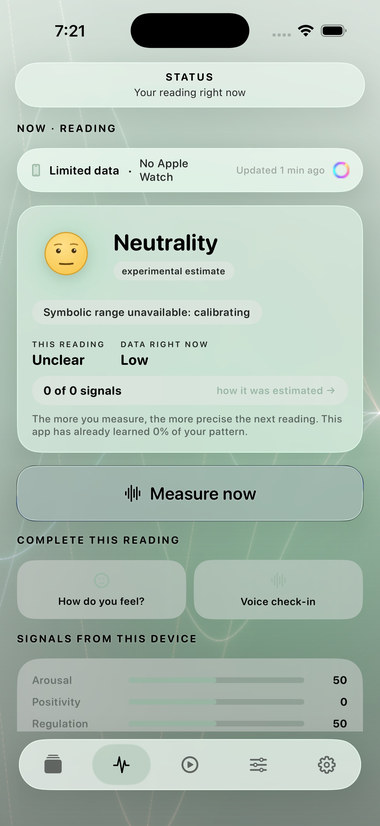
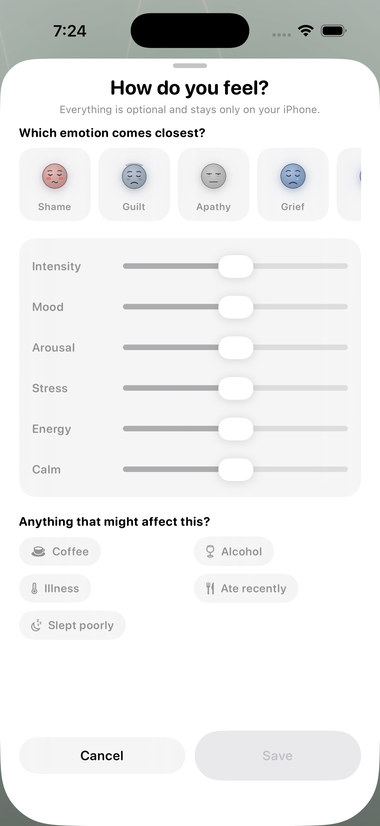
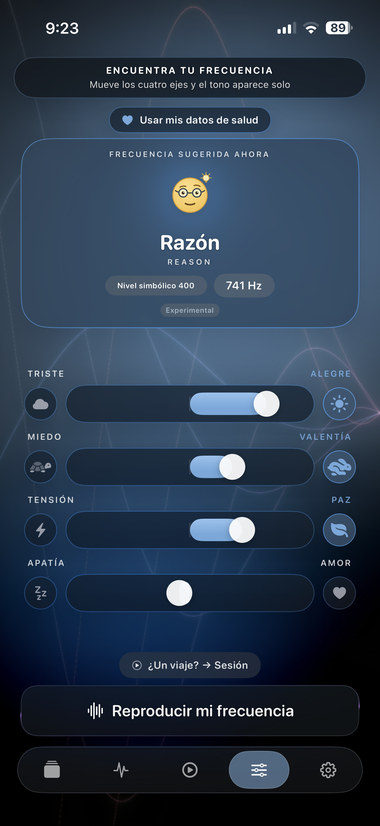
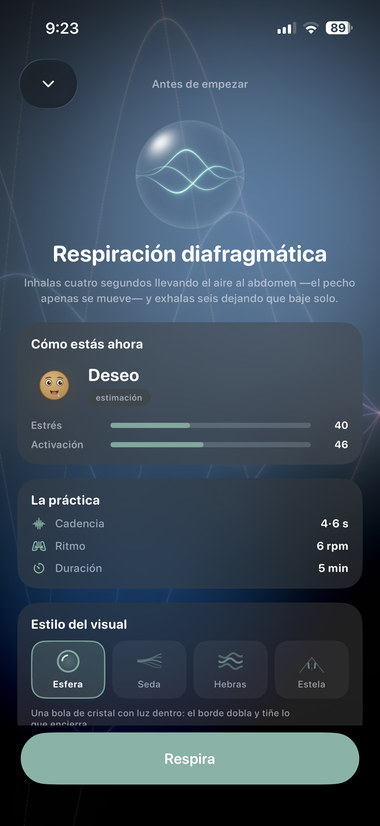
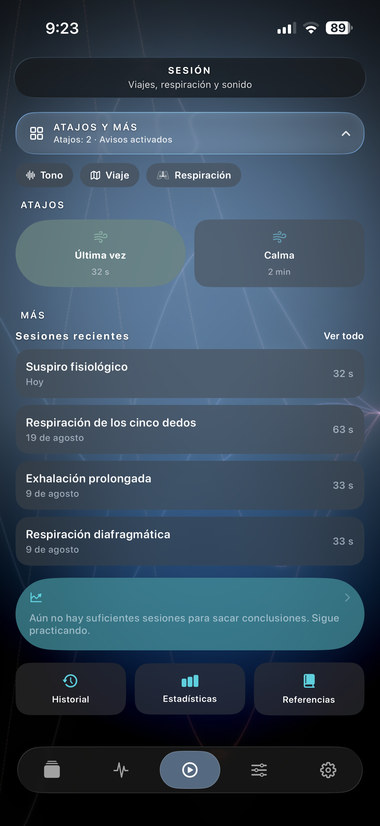
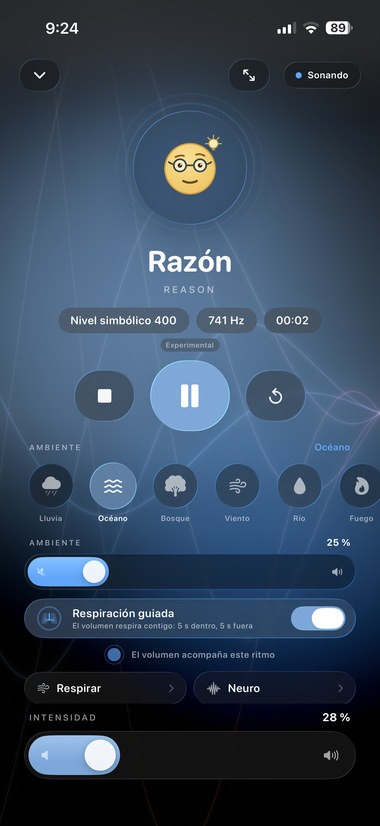
Explore, Status, Session and Find, in light and dark, plus the screens of a journey from start to finish. Everything you see is an estimate with its confidence declared; the symbolic level comes from the map and the hertz are experimental accompaniment.
How it estimates
To take you somewhere, the app needs an idea of where you are. It draws that from several signals, each with its own quality, and always shows it with its confidence. Never from a single number.
The Apple Watch reads heart rate and heart rate variability, compared with your own baseline, to estimate how much arousal there is in your body right now.
The rate you breathe at, and the pace at which your body settles into coherence. It is personal, which is why the app learns it from you.
So a brisk walk isn't mistaken for nerves, and so it knows when you are coming off a bad night.
Camera, microphone, calendar and location, only if you turn them on, and always processed on your device.
How you feel, in your own words. It is the signal that corrects all the others, and the only one the app treats as ground truth.
Every estimate comes with its confidence and a “How do we work this out?” sheet that explains which signals weighed in. Part of the engine is marked experimental, and that is how it appears on screen.
The map
The app arranges emotions on a seventeen-level map inspired by David R. Hawkins's Map of Consciousness. It is there to name where you are and choose where to go: from fear to courage, from courage to acceptance. It is a symbolic frame, not a biological measurement, and the app always speaks of a range, never an exact point.
Level 200 is the map's turning point: below it, the states that drain energy; above it, the ones that give it back. A journey takes you up in steps, not in one jump.
Sessions
A journey combines a breathing technique with binaural beats, isochronic tones and an ambience. You can do it in silence, with your own music underneath, or with a recorded guide voice that accompanies each phase, in your language.
Diaphragmatic, extended exhale, five-finger, physiological sigh. Each technique tells you how long it lasts and what pace it keeps, and you pick how to see it: sphere, silk, threads or trail.
A session doesn't jump from one state to another: it moves through legs, and each leg has its own band, tone and technique. Short, standard or deep, depending on the time you have.
The watch runs the journey on its own: the orb marks inhale and exhale, the crown sets the intensity and the ambiences are one tap away. So you can close your eyes.
The hertz of each leg are a symbolic and experimental accompaniment. The app presents them as a suggestion, never as a measured property of your body, and labels them that way on screen.
Slow breathing does have literature behind it, and the app keeps the two apart: each technique carries its evidence note, and the tones carry their experimental tag.
Privacy
Everything the app estimates about you is computed on your iPhone and your Apple Watch. No account, no server, and no score about you stored anywhere.
Estimation runs on the iPhone and on the watch. The model ships inside the app; your signals don't leave to be computed.
Every source is authorised separately and can be revoked whenever you like. Without permission that signal doesn't enter, and the app keeps working with the rest.
There is no number about you stored on any server. What you see are estimates with their confidence, not a verdict.
Beta on the App Store
The NewMe Hertz beta is on the App Store. Leave your name, email and country and we will show you the download link.
For the curious
If you want to know what sits behind every estimate and every tone, it is published.
NewMe Hertz is a wellbeing and reflection tool. It is not a medical, diagnostic or therapeutic tool, and it does not replace a health professional. If you are not well, seek help; the app can keep you company in the meantime.
The levels of the map are a conceptual frame. The audio frequencies are an aesthetic, experimental assignment. What the app shows you are estimates with declared confidence, not facts about you.